The Role of Virtual Staging in the 2027 Real Estate Market
26 November 2026
By the time 2027 rolls around, the way buyers experience a home before they ever set foot in it will feel almost unrecognizable compared to the open-house era most of us grew up with. Virtual staging, once a novelty that agents used to dress up empty listings, has quietly become one of the most consequential tools in the marketing stack. And the role it plays in 2027 is not simply "make empty rooms look furnished." It is closer to a full-blown decision-support system that shapes pricing, buyer psychology, negotiation leverage, and even how quickly a property moves from listing to closing.
If you are an agent, a seller, or an investor trying to figure out where virtual staging fits into your strategy, this is for you. Let us walk through what is actually changing, what stays the same, and where the smart money is placing its bets.

Why Virtual Staging Matters More Than Ever in 2027
The short answer is that the first showing is now almost always digital. Buyers scroll before they drive. They swipe before they schedule. A listing gets judged in roughly the same amount of time it takes to decide whether to keep watching a video. That has been true for years, but by 2027 the expectation has hardened into a norm: buyers assume they will see a property presented at its best, and they get suspicious when they do not.Virtual staging sits right at that intersection of expectation and trust. Done well, it removes the mental friction of imagining a couch in an empty living room. Done poorly, it erodes credibility faster than a blurry photo ever could. The role in 2027 is therefore less about "adding furniture" and more about managing perception with precision.
There is also a practical driver. Inventory in many markets fluctuates in ways that make physical staging expensive and slow. Hauling furniture in and out of a vacant unit costs money, ties up capital, and delays the listing. Virtual staging compresses that timeline to days or even hours, which matters enormously when a seller wants to hit a weekend launch window or an investor needs to flip a unit quickly.
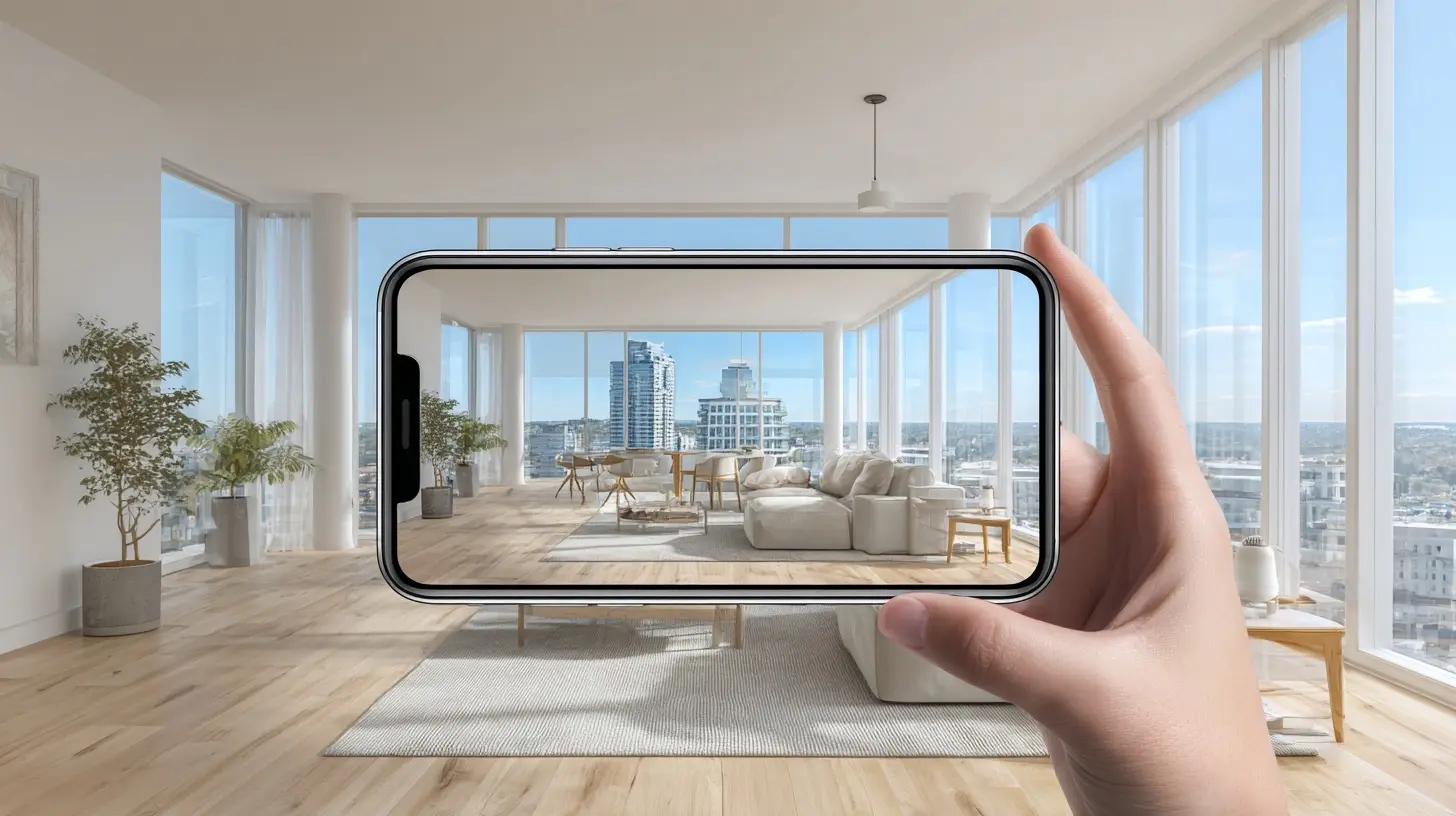
The Technology Has Quietly Grown Up
The virtual staging of a few years ago had a tell. You could spot it from the thumbnail: shadows that did not match, a rug that seemed to float, lighting that ignored the actual windows. By 2027, that gap has narrowed dramatically. Modern tools render light, texture, and perspective with enough fidelity that the line between "staged photo" and "real room" is genuinely blurry at typical screen sizes.Here is why that matters beyond aesthetics. Buyer trust is fragile. When a buyer walks into a property and the reality does not match the photos, the entire listing loses credibility, and the agent loses the benefit of the doubt on everything else. The technology improving means virtual staging can now be used more aggressively, in more rooms, and with less risk of a jarring in-person letdown, provided the staging is done honestly.
That last word, honestly, is doing a lot of work. More on that shortly.

What Virtual Staging Actually Does to Buyer Behavior
Let us get into the mechanics, because this is where most articles stay vague.An empty room forces the buyer to do cognitive labor. They have to imagine scale, furniture placement, traffic flow, and how the space would feel with their own things. Some buyers enjoy that exercise. Most do not. They want to feel something immediately. Virtual staging short-circuits that labor by giving them a finished picture to react to.
The psychological effect is real and worth understanding. A staged room creates an emotional anchor. Once a buyer sees a cozy reading nook by the window, they start mentally moving in. That attachment is exactly what you want before a showing, because it shifts the buyer from evaluating to wanting. Wanting is where negotiation leverage lives.
But there is a flip side. If the virtual staging is too aspirational, too polished, or clearly disconnected from the actual property's condition, the buyer arrives with a mental image that reality cannot match. The result is disappointment, and disappointment is expensive. The best practitioners in 2027 treat virtual staging as a translation tool, not a fantasy generator. The goal is to show what the space can genuinely become, not what a magazine spread looks like.

Where Virtual Staging Wins and Where It Falls Short
It is tempting to treat virtual staging as a universal upgrade. It is not. Knowing when to use it and when to skip it is the difference between a sharp professional and someone who applies a tool because everyone else does.Situations Where It Clearly Wins
Vacant properties top the list. An empty room reads as smaller and colder than it is, and buyers consistently struggle to judge scale without reference points. Virtual staging gives them those reference points. A sofa, a rug, and a dining table instantly communicate how much space exists.Awkward layouts benefit enormously. A long narrow room, an odd alcove, or a space with an unusual entry can confuse buyers. Strategic virtual furniture can show a sensible use for that space, which is often the difference between "I do not get it" and "oh, that works."
New construction and pre-sale units are another strong case. Buyers cannot walk through a finished product, so virtual staging becomes the primary way to communicate the vision. This is where the technology earns its keep.
Finally, properties that photograph poorly when empty, such as those with dated finishes that distract the eye, can benefit from staging that draws attention to layout and light rather than surface details.
Situations Where It Can Backfire
Occupied homes with the seller's own furniture are a tricky case. Sometimes virtual staging is used to replace existing furniture, which can feel deceptive if the result is dramatically different from what a buyer will actually see. If you go this route, be transparent and consider showing both versions.Very small rooms are another caution zone. Virtual staging can make a tight bedroom look comfortable, but if the buyer arrives and cannot fit a queen bed where the photo suggested one would go, you have created a trust problem. In these cases, less is more, and honest labeling is non-negotiable.
Luxury properties with distinctive architecture can also suffer. If a home's selling point is a one-of-a-kind interior, generic virtual furniture can actually flatten its character. Sometimes the right move is a light touch or no staging at all.
The Honesty Question: Disclosure, Trust, and the Rules of the Road
This is the part where a lot of agents get sloppy, and it costs them.Virtual staging that is not disclosed is a liability. It is not just an ethical issue; it is a practical one. Buyers who feel misled talk. They leave bad reviews, they warn their networks, and in some cases they have grounds for complaints. The professional standard in 2027 is straightforward: label virtually staged images clearly, and make sure the listing description reflects reality.
The smartest approach is to pair staged images with at least one unstaged photo of the same room. This does two things. It shows buyers you have nothing to hide, and it gives them an accurate sense of the actual space. That combination tends to build more trust than either image alone.
There is also a subtler point about honesty. Virtual staging works best when it is plausible. A modest ranch home staged with restrained, realistic furniture will land better than the same home staged like a boutique hotel. Buyers are not fooled by aspiration when the exterior and price point tell a different story. Match the staging to the property's actual market position, and you get the emotional lift without the credibility risk.
Virtual Staging Versus Physical Staging: A Practical Comparison
The honest answer is that these are not competitors so much as tools for different jobs. Let us break down the trade-offs.Physical staging delivers something virtual staging cannot: a real, walk-through experience. Buyers can sit on the sofa, feel the room's proportions, and judge the light at different times of day. For high-end properties where in-person impressions drive the sale, physical staging still earns its cost.
But physical staging is expensive, slow, and inflexible. Furniture has to be selected, delivered, arranged, and eventually removed. If the property sits on the market, the staging costs keep accruing. And if a room is not working, changing it means moving furniture again.
Virtual staging is fast, cheap by comparison, and endlessly flexible. You can restage a room in a different style for a different buyer segment without touching a single piece of furniture. You can test a modern look against a traditional one and see which performs better in your market. That flexibility is a genuine strategic advantage, not just a cost saver.
The best practice in 2027 is often a hybrid. Use virtual staging for the listing photos to cast the widest possible net, and use light physical staging, or none at all, for the actual showings. This keeps costs down while giving buyers an honest in-person experience. For luxury and unique properties, physical staging may still lead, with virtual staging used to preview possibilities or to furnish rooms that are impractical to stage physically.
Common Mistakes That Undermine Results
Even experienced agents make these errors, and each one chips away at the tool's effectiveness.The first is over-staging. Filling every room with furniture and decor can make a space feel cluttered and smaller than it is. Restraint reads as confidence. A few well-chosen pieces per room usually outperform a fully decorated scene.
The second is ignoring the property's actual light. Virtual furniture that casts shadows inconsistent with the real windows creates an uncanny effect that buyers notice, even if they cannot articulate why. Good staging respects the room's genuine light sources.
The third is mismatching style to buyer. A staging style that appeals to one demographic can alienate another. Know who is most likely to buy the property and stage toward that buyer, not toward your personal taste.
The fourth is skipping the unstaged comparison photo. This is the single easiest trust-building move available, and skipping it is a missed opportunity.
The fifth is treating virtual staging as a substitute for fixing real problems. If a room has a glaring issue, such as a damaged floor or a poorly placed door, staging will not solve it. Address the underlying problem first, then stage.
What the 2027 Market Rewards
By 2027, buyers have become sophisticated consumers of listing content. They have seen thousands of photos. They can smell a fake. What they reward is clarity, honesty, and a genuine sense of possibility.That means the agents who win are the ones who use virtual staging as a communication tool rather than a decoration tool. They show buyers what a space can be, they disclose clearly, they provide reality alongside the vision, and they let the property's actual strengths do the heavy lifting.
There is also a market-level effect worth noting. As virtual staging becomes standard, the baseline expectation rises. A vacant listing with no staging at all may start to look lazy or underprepared compared to competitors. That does not mean every listing needs elaborate staging, but it does mean the decision to skip it should be deliberate, not accidental.
Practical Recommendations for Getting It Right
If you are putting together a plan for 2027, here is a grounded approach.Start with a clear brief. Define the target buyer, the property's strongest features, and the style that fits both. Give your staging provider specific direction rather than generic instructions.
Insist on realistic proportions. Ask for furniture scaled to the actual room dimensions, and check the result against the floor plan. A quick sanity check prevents embarrassing mismatches.
Always include at least one unstaged photo per staged room. Label staged images clearly. Write listing copy that reflects the real condition of the property.
Test and measure. Track how staged listings perform against similar unstaged ones in your market. Look at click-through rates, showing requests, and days on market. Let the data tell you where virtual staging is pulling its weight and where it is not.
Keep the human touch. Virtual staging is a tool, not a strategy. The agent's judgment about pricing, positioning, and buyer psychology still drives the outcome. The technology amplifies good decisions and exposes bad ones.
The Bottom Line
Virtual staging in 2027 is no longer a gimmick or a nice-to-have. It is a core part of how properties are presented, evaluated, and sold. But its power comes with responsibility. The agents and sellers who use it well are the ones who treat it as an honesty-preserving tool that helps buyers see potential without distorting reality. Those who use it as a shortcut to a prettier photo will find that trust, once lost, is the hardest thing in real estate to stage back into place.
all images in this post were generated using AI tools
Category:
Virtual StagingAuthor:

Mateo Hines