Virtual Staging for Condos and Small Apartments in 2027
1 October 2026
Selling a condo or a small apartment has always been a different game from selling a house. You do not have a sprawling front yard, a three-car garage, or a bonus room that photographs like a dream. You have square footage that has to work harder, light that may come from only one direction, and buyers who are often comparing your unit to five nearly identical ones in the same building or the same block.
Virtual staging has become one of the most practical tools for that exact situation. By 2027, it has moved from a novelty that raised eyebrows to a standard part of listing preparation in most competitive urban markets. But the way it is used well and the way it is used badly are very different things, and the gap between the two has real consequences for how fast your listing sells and how much you walk away with.
This article is for sellers, real estate agents, and property managers who want to understand virtual staging in a way that goes past the sales pitch. We will look at why small spaces benefit more than large ones, where the technology is heading, what it costs, what can go wrong, and how to make decisions that hold up when a buyer walks through the door.

Why Small Spaces Are the Hardest to Sell Empty
An empty 450 square foot studio is one of the most difficult things to photograph in all of real estate. Without furniture, the human eye struggles to judge scale. A room that is genuinely functional can read as a cramped box. A room with good proportions can look oddly shaped. Buyers walk in, see bare walls and a blank floor, and default to one of two reactions: "This feels small" or "I cannot picture living here."That is not a failing of the buyer. It is how perception works. Furniture gives the brain reference points. A sofa tells you how wide the living area is. A bed tells you whether a queen fits with room to walk around it. A dining table for two tells you the kitchen corner is usable. Without those anchors, the space becomes abstract, and abstract spaces are hard to fall in love with.
Virtual staging solves this by adding those reference points digitally, at a fraction of the cost of physically furnishing the unit. For a small apartment, that math is especially favorable. You might spend a few thousand dollars to physically stage a studio for a couple of months, factoring in rental furniture, delivery, insurance, and the risk of damage. Virtual staging for the same unit can cost a small fraction of that and can be updated in a day if the market responds poorly to a particular style.
There is a second reason small spaces benefit disproportionately. Condos and apartments tend to sell on emotion and lifestyle more than on raw specifications. A buyer looking at a suburban house is thinking about school districts and lot size. A buyer looking at a one-bedroom condo is often thinking about how their morning will feel, where their coffee maker goes, whether the light hits the corner where they would put a reading chair. Virtual staging speaks directly to that mental movie.

What Virtual Staging Actually Looks Like in 2027
The technology has matured in ways that matter for practical use. A few years ago, most virtual staging was done by manually placing 3D furniture models into a photo, often with lighting that did not quite match and shadows that felt pasted on. The results could be convincing at a glance but fell apart on closer inspection.By 2027, several shifts have changed the quality and the workflow.
First, lighting and shadow matching has improved considerably. Modern tools analyze the direction and color temperature of the light in the original photo and adjust the furniture accordingly. This sounds technical, but the practical effect is simple: the staged image looks like it belongs to the room rather than being dropped on top of it.
Second, AI-assisted decluttering has become a standard first step. Instead of working from a photo that still contains the seller's belongings, many services now remove existing furniture and clutter, then rebuild the room. This matters enormously for condos, where a seller's personal items can make a small space feel even tighter.
Third, virtual renovation has grown beyond furniture. It is now common to show a dated kitchen with updated cabinets and countertops, or a bathroom with new tile, in a virtual rendering. This is powerful for small apartments because buyers often cannot see past cosmetic flaws in tight spaces. A dark, dated galley kitchen can kill a sale before the buyer ever reaches the bedroom.
Fourth, and this is the part that deserves real caution, the line between "staged" and "misleading" has become a live legal and ethical question in many markets. More on that shortly.

The Core Decision: Photo Staging vs. Video vs. 3D Walkthroughs
Not all virtual staging is the same product, and choosing the wrong format for your listing wastes money.Photo staging is the most common and the most cost-effective. You take a set of high-quality still photos, and a service adds furniture to each. This is ideal for listings on the major portals, where the first photo is often the only one a buyer sees before deciding to click or scroll past.
Video staging takes the same concept into motion. It can be effective for walkthroughs, but it is more expensive and more prone to looking artificial, because motion exposes inconsistencies in lighting and perspective that a still image can hide. For a small apartment, a short, well-edited video with staged frames can work, but it is usually a secondary investment after strong photos.
3D walkthroughs and interactive tours are the premium option. They let a buyer move through the space and see it furnished from multiple angles. For condos, this can be genuinely useful because buyers often want to understand the flow between the entry, kitchen, living area, and bedroom. The trade-off is cost and complexity. If your unit is one of twenty similar units in a building, a full 3D tour may be overkill. If it is a unique loft or a unit with an unusual layout, the investment can pay off.
A practical rule: start with photo staging, measure the response, and only escalate to video or 3D if the listing is not getting traction. Do not buy the most expensive option first out of anxiety.
What It Costs and What You Get
Pricing varies widely by market and provider, so treat any specific number as a range rather than a promise. In most urban markets, per-photo virtual staging for a standard room falls in the low tens of dollars per image. A typical one-bedroom apartment might need five to eight staged photos to cover the main rooms. A studio might need three to five.That means a full virtual staging package for a small unit often lands in the low hundreds of dollars. Compare that to physical staging, which for a small apartment can run into the thousands per month once you factor in furniture rental, delivery, setup, and removal.
There are also hybrid models. Some companies offer a flat fee per room, some charge per photo, and some bundle virtual staging with photography, floor plans, and listing copy. Bundles can be a good deal if you need all of those services, but they can also push you toward options you do not need. Read the scope carefully.
One cost that sellers often overlook: revisions. If the first staging style does not match the unit's character, you may want a second pass. Ask upfront how many revisions are included and what triggers an extra charge.
Matching the Staging to the Buyer You Actually Want
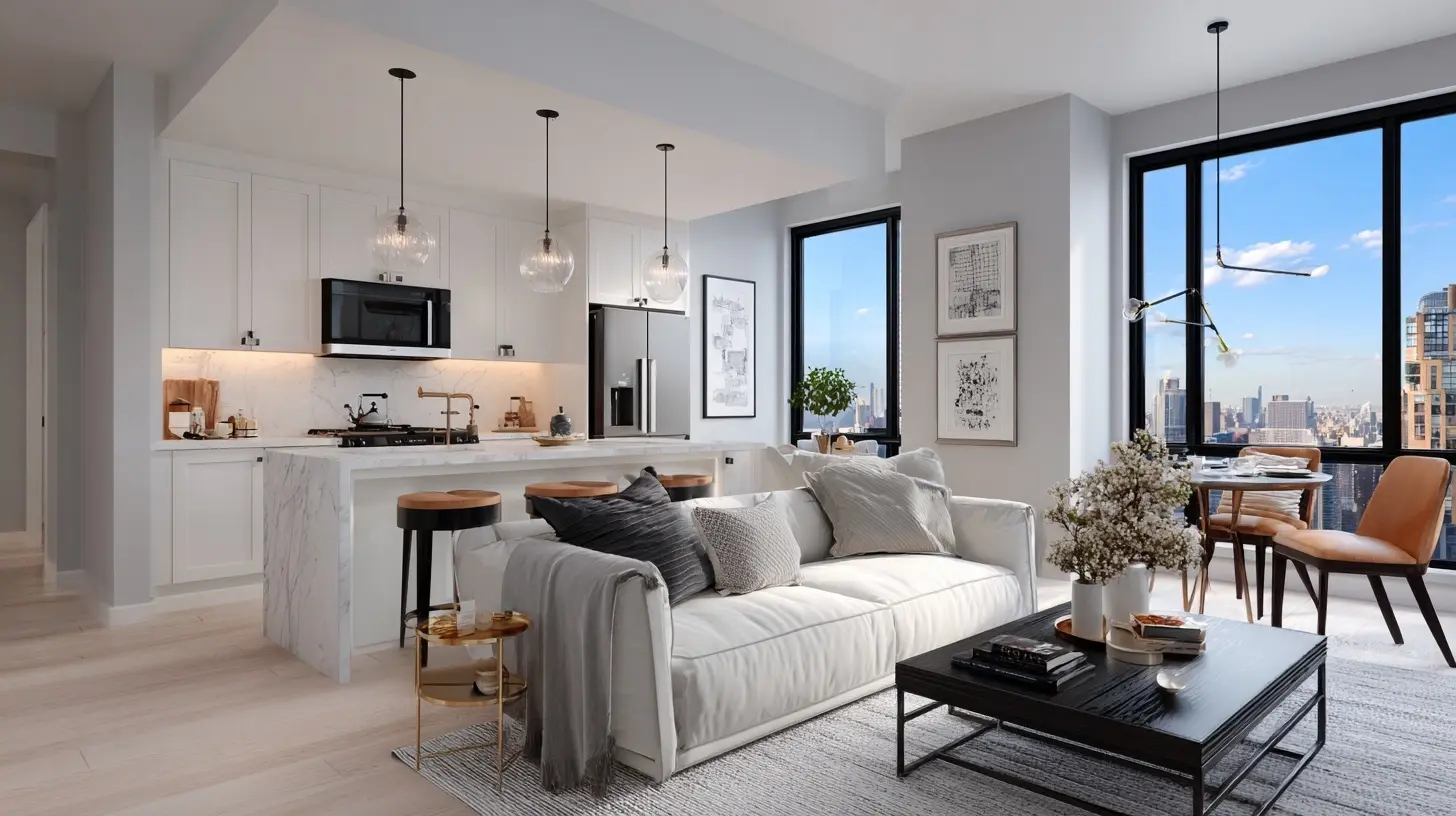
This is where most virtual staging goes wrong. Sellers and agents pick furniture they personally like, or they pick whatever is trending on design blogs, without thinking about who is most likely to buy the unit.A small apartment in a downtown building near transit and offices is usually appealing to young professionals, students, or downsizers. The staging should reflect that. Clean lines, a dedicated work-from-home corner, a compact but comfortable sofa, and lighting that makes the space feel warm rather than sterile.
A condo in a family-oriented suburb is a different buyer. The staging might emphasize storage, a proper dining setup, and a layout that shows how a child's room or a guest room could work.
A mistake I see often is staging a small unit with oversized furniture. A giant sectional in a 400 square foot living room does not make the room look generous. It makes it look like the furniture does not fit. The whole point of staging is to show the space working, not to show off a furniture catalog.
Another common mistake is over-staging. Filling every surface with decor, plants, and accessories can make a small space feel cluttered. Restraint reads as spaciousness. A few well-chosen pieces with clear walkways between them will almost always outperform a dense, busy arrangement.
The Ethics and Disclosure Question
Virtual staging is legal in most markets when it is disclosed. The trouble starts when it is not.The core principle is simple: a buyer should never be misled about what they are actually buying. Adding a sofa to an empty room is generally fine, as long as the listing makes clear that the image is virtually staged. Adding a window that does not exist, removing a structural column, or showing a room as larger than it is crosses into misrepresentation.
For condos and small apartments, the risks are specific. It is tempting to virtually widen a narrow galley kitchen or to show a closet as a walk-in when it is a reach-in. It is tempting to remove the radiator or the awkward bulkhead. Resist that temptation. Even if it helps you get an offer, it can unravel during inspection, appraisal, or the buyer's walkthrough, and the fallout can include lost deposits, complaints, and damage to your reputation.
Best practice is to include a clear disclaimer on every staged image and in the listing description. Something as simple as "Virtually staged" in the corner of the photo, plus a line in the listing text, covers most situations. Some agents go further and include a link to the original unstaged photos. That transparency builds trust and can actually speed up a sale, because buyers feel they are dealing with someone honest.
Where Virtual Staging Fails
Virtual staging is not a fix for every problem, and pretending otherwise wastes money.It fails when the underlying photos are bad. If the original image is poorly lit, shot from a awkward angle, or taken with a phone that distorts the room, no amount of digital furniture will save it. Good photography comes first. Virtual staging is a layer on top of that, not a substitute.
It fails when the unit has a serious flaw that staging cannot hide. A windowless bedroom, a kitchen with no counter space, or a bathroom that is genuinely too small for comfort will still read as problematic to a buyer standing in the room. Virtual staging can soften first impressions, but it cannot change what a walkthrough reveals.
It fails when the staging style clashes with the building or the neighborhood. A hyper-modern, minimalist staging in a pre-war building with original moldings can feel jarring. Match the tone of the space.
And it fails when it is used to compensate for a price that is simply too high. If the unit is overpriced, no amount of virtual furniture will fix that. Buyers are comparing your unit to others in the same building and the same area. Staging helps you compete; it does not let you skip the pricing conversation.
A Practical Workflow for 2027
If you are preparing a condo or small apartment for sale, here is a sequence that tends to work well.Start with a professional photography session on a day with good natural light. Shoot the unit empty if possible, or declutter thoroughly first. Get wide, well-lit images of every room, including closets and any storage.
Decide which rooms need staging. Not every photo needs furniture. A clean, bright bathroom often looks better empty. A hallway usually does not need staging. Focus on the rooms where buyers struggle to imagine living: the living area, the bedroom, and any awkward corner or nook.
Choose a staging style that fits the likely buyer, not your personal taste. Ask your agent for input, since they see what similar units are doing.
Get the staged images back and review them critically. Do the shadows make sense? Does the furniture fit the proportions of the room? Does the image still look like the actual unit? If something feels off, ask for a revision.
Add clear disclosure to every staged image and to the listing description. Keep the original photos on hand in case a buyer asks.
Launch the listing and track the response. If you are getting clicks but no showings, the issue may be price or the lead photo. If you are getting showings but no offers, the issue may be the unit itself or the price. Virtual staging can help with the first problem; it cannot solve the second.
What to Watch for in 2027 and Beyond
The tools will keep getting better, and that is mostly good news. Expect more accurate lighting, faster turnaround, and more realistic renderings. Expect virtual renovation to become more common, especially for older condos where a kitchen or bathroom update is the difference between a quick sale and a long listing.But better tools also raise the bar for honesty. As virtual staging becomes more convincing, the responsibility to disclose becomes more important, not less. Buyers are getting more sophisticated too. Many now assume that any beautifully furnished listing photo is staged until proven otherwise, and they will ask for the original images. Being ready for that question is part of doing this well.
The other shift to watch is how platforms handle staged content. Some portals have experimented with labeling or filtering virtually staged images. Whether that becomes universal is uncertain, but the direction is clear: transparency is becoming an expectation rather than a courtesy.
The Bottom Line
Virtual staging is one of the highest-return, lowest-risk investments you can make when selling a condo or small apartment. It solves a real problem, which is that empty small spaces are hard for buyers to understand and hard to love. It costs a fraction of physical staging. It can be updated quickly. And when it is done with restraint and disclosed honestly, it helps buyers see themselves in the unit rather than just seeing walls and floors.The sellers who get the most out of it are the ones who treat it as one part of a larger strategy: good photography, realistic pricing, a clear-eyed view of the unit's flaws, and a staging style that speaks to the actual buyer. Do that, and your small apartment will not feel small at all. It will feel like home, which is exactly what you are selling.
all images in this post were generated using AI tools
Category:
Virtual StagingAuthor:

Mateo Hines