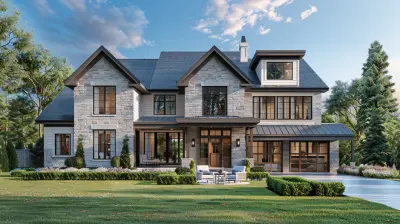
Price Swings: How Real Estate Cycles Create Volatility in Home Values
28 February 2026
Real estate prices can feel like a rollercoaster ride—one moment they’re surging, the next they’re plummeting. If you've ever wondered why home values fluctuate so dramatically, you're not alone. These price shifts aren’t random; they’re part of predictable (yet sometimes chaotic) real estate cycles.
Understanding these cycles can help buyers, sellers, and investors make smarter decisions. So, why do home values fluctuate so much? And how can you make sense of real estate cycles to avoid financial pitfalls? Let’s dive into the ups and downs of the housing market. 
Understanding Real Estate Cycles
Housing markets don't just rise endlessly or crash out of nowhere. They follow a pattern—known as the real estate cycle—that repeats over time. While the length and intensity of each cycle vary, they generally follow four key phases:1. Recovery – The market stabilizes after a downturn.
2. Expansion – Prices rise as demand increases.
3. Hyper-Supply – Too many homes flood the market, slowing down growth.
4. Recession – Prices decline due to oversupply and lack of demand.
These phases create volatility, driving home values up and down. But what causes these shifts? Let’s break it down. 
What Drives Home Prices Up and Down?
Home values don’t change randomly—there are specific forces at play. Here are some key factors that fuel price swings:1. Interest Rates and Mortgage Costs
Ever notice how mortgage rates are constantly in the news? That’s because they have a huge impact on home prices. When interest rates are low, borrowing money is cheaper, making homeownership more affordable. This drives up demand, leading to higher prices.But when rates rise, fewer people can afford to buy, demand drops, and home values may decline. This is why the Federal Reserve’s decisions on interest rates have such a direct effect on the housing market.
2. Supply and Demand Imbalance
Real estate is all about supply and demand. When there are more buyers than available homes, prices surge. But when there’s an oversupply—too many homes and not enough buyers—prices can tumble.Take the 2008 housing crash, for example. A massive oversupply of homes combined with risky lending practices led to plummeting prices. On the flip side, today’s market struggles with limited inventory, pushing prices higher despite high mortgage rates.
3. Economic Conditions
A strong economy typically means rising home prices. When people have stable jobs and higher incomes, they’re more confident about buying homes. But when the economy slows, layoffs increase, and consumer confidence drops, demand for housing weakens, leading to price declines.Recessions often trigger housing downturns. Look at the 2020 pandemic—initially, there was panic, but then record-low interest rates and increased demand led to skyrocketing prices. Economic unpredictability always plays a role in housing cycles.
4. Government Policies and Regulations
Believe it or not, government policies can fuel or cool down the real estate market. Tax incentives, zoning laws, and lending regulations all impact home prices. For example, first-time homebuyer tax credits can boost demand, while stricter lending standards can limit access to mortgages, reducing the number of buyers in the market.Changes in property taxes or rent control laws can also affect real estate investments, ultimately influencing home values.
5. Speculation and Investor Behavior
Real estate isn’t just about homebuyers—investors play a huge role, too. When investors flood the market, buying up properties and expecting prices to keep rising, they can create unsustainable price bubbles.But when investors pull out, either due to economic uncertainty or rising costs, housing markets can cool down fast. The 2008 crash was driven partly by speculative buying, where investors took on risky loans, expecting endless appreciation. When reality hit, prices collapsed. 
The Four Phases of a Real Estate Cycle
To make sense of real estate volatility, let's take a closer look at each phase of the real estate cycle.1. Recovery: The Market Rebuilds
After a downturn, the housing market slowly starts to stabilize. Prices remain low, and not many people are buying, but savvy investors might start looking for good deals. Job growth and economic improvement help kickstart this phase.At this stage, home prices are still relatively affordable, making it a great time to buy before the next boom.
2. Expansion: Demand Surges, Prices Rise
This is the sweet spot for homebuyers and sellers. The economy is strong, job creation is up, and people feel confident about making big purchases. Construction activity accelerates to meet growing demand, and home prices rise steadily.However, competition can get fierce. Buyers may find themselves in bidding wars, and affordability can start to become an issue. This is often when you hear about houses selling above the asking price.
3. Hyper-Supply: Too Many Homes, Not Enough Buyers
As homebuilders rush to keep up with demand, they sometimes go overboard, leading to an oversupply of homes. When this happens, the market slows down. Buyers have more options, and homes take longer to sell.Sellers have to lower their prices to attract buyers, signaling the beginning of a market cooldown.
4. Recession: Prices Drop, Market Cools
This is the dreaded downturn. Economic uncertainty, higher interest rates, or job losses can cause demand to plummet. Foreclosures increase, and home values decline.While it’s a tough time for sellers, buyers and investors with cash on hand can find incredible deals. The cycle eventually resets, leading back to recovery. 
How to Navigate Real Estate Price Swings
No one has a crystal ball, but understanding real estate cycles can help you make better decisions. Here’s how to stay ahead of the game:1. Time Your Buy or Sell Wisely
If you’re a buyer, purchasing during the recovery or early expansion phase can mean getting a home before prices skyrocket. If you’re selling, the peak of the expansion phase is ideal—it’s when demand is highest.2. Keep an Eye on Interest Rates
Since mortgage rates directly influence real estate affordability, tracking them can give you an edge. If rates are rising, locking in a lower rate sooner rather than later might save you thousands.3. Consider Long-Term Trends
Short-term price fluctuations can be nerve-wracking, but real estate is typically a long-term game. Buying and holding in a stable area with strong job growth can help weather market downturns.4. Avoid Speculative Buying
Jumping in just because prices are going up can be risky. Always evaluate the fundamentals—location, job market, and affordability—before making a move.5. Diversify Your Investments
If you’re an investor, don’t put all your eggs in one basket. A diverse portfolio—across different locations and property types—can help minimize risks during market downturns.The Bottom Line
Housing prices aren’t random; they follow patterns that repeat over time. Real estate cycles create volatility, but if you understand these patterns, you can make informed decisions—whether you’re buying, selling, or investing.Yes, real estate has its ups and downs, but with the right knowledge and strategy, you can ride the waves instead of getting wiped out. So, next time you see home prices swinging wildly, remember—it's all part of the cycle.
all images in this post were generated using AI tools
Category:
Market CyclesAuthor:

Mateo Hines
Discussion
rate this article
2 comments
Ainsley Wade
Great insights on the dynamics of real estate cycles! Understanding these price swings is crucial for both buyers and sellers navigating the market. Thank you!
March 6, 2026 at 4:05 AM
Mateo Hines
Thank you for your kind words! I'm glad you found the insights helpful for navigating the real estate market.
Lyla McAdoo
This article astutely highlights the inherent volatility of real estate markets, yet it underplays the role of external economic factors and consumer sentiment that significantly influence price swings and market stability.
March 3, 2026 at 3:30 AM
Mateo Hines
Thank you for your insightful comment! I acknowledge the importance of external economic factors and consumer sentiment in shaping real estate prices and will consider this in future discussions.