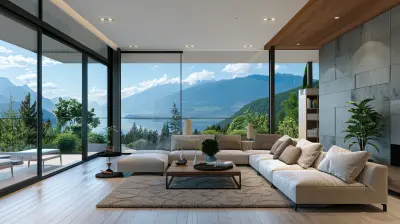
The Future of Suburban vs. Urban Living Post-2027
10 September 2026
The conversation about where we live has shifted from a simple binary of "city versus suburb" to a far more complex calculus involving remote work, climate risk, infrastructure decay, and the fundamental rethinking of what a home is for. By 2027, the lines will not be blurred so much as redrawn entirely. The old assumptions, that cities are for career climbers and suburbs are for families who sacrifice convenience for space, are already breaking down. What comes next is not a victory lap for either side, but a fragmentation of both into distinct micro-markets that serve very different needs.
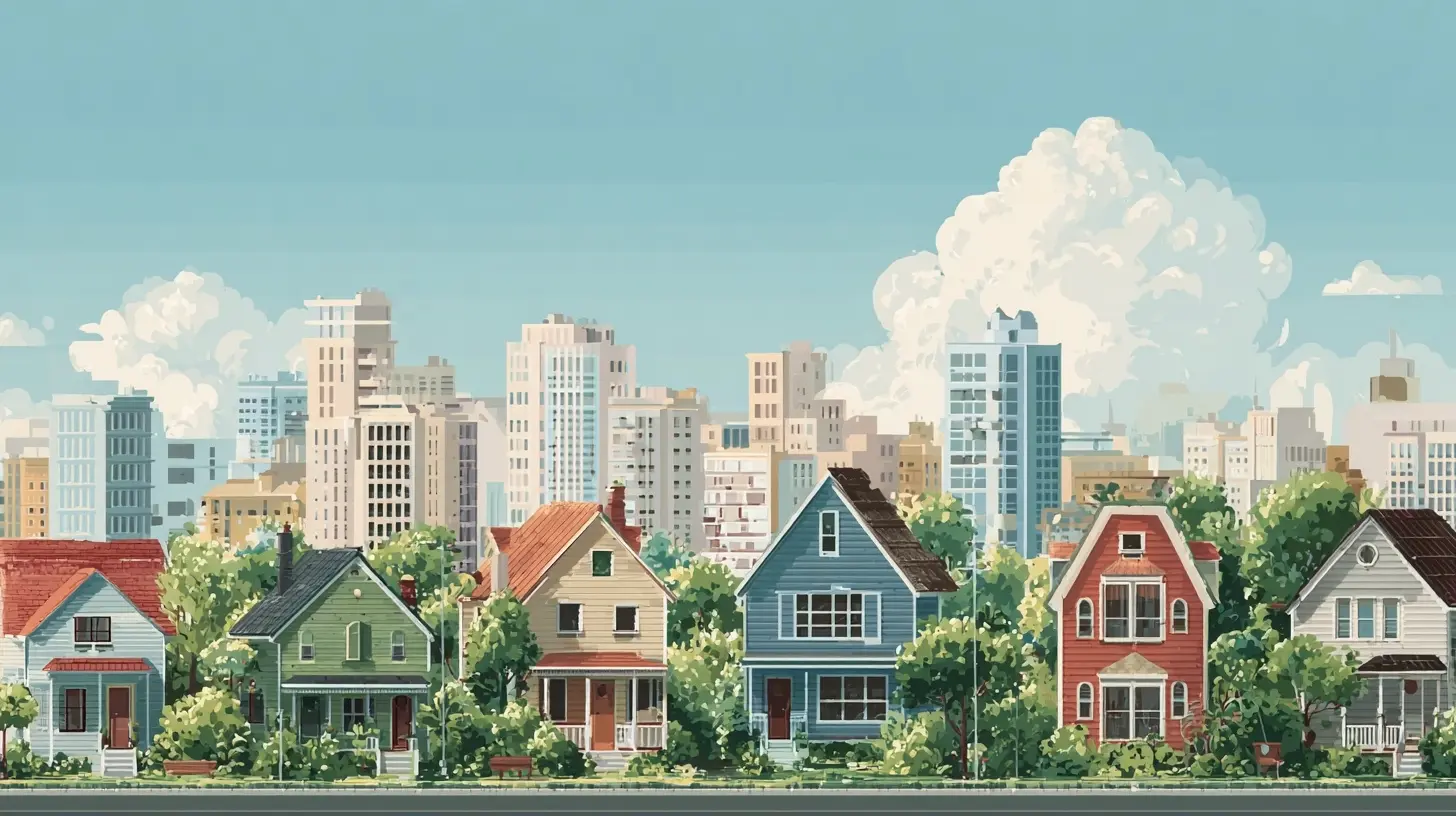
The End of the Commute as a Deciding Factor
For over a century, the daily commute was the single most powerful force shaping residential choice. The 30-minute rule, the distance to the nearest transit hub, the parking spot near the office, these dictated property values more than school districts or square footage. Post-2027, that paradigm is effectively dead for a significant portion of the workforce.The hybrid model, which many companies tried to abandon in 2023 and 2024, has proven stubbornly persistent. The reason is not employee laziness. It is the realization that for deep-focus work, collaboration, and talent retention, a mix of in-person and remote time outperforms both full-office and full-remote extremes. By 2027, the standard will be two to three days in the office for knowledge workers, with the remaining days spent at home. This has a profound effect on geography.
The "commute" is no longer a daily cost. It is a twice-weekly inconvenience. That changes the acceptable radius. A 90-minute train ride twice a week is tolerable. A 45-minute drive five days a week is not. This single shift unlocks vast swaths of exurban and even rural territory that were previously uninhabitable for white-collar professionals. It also revalues the inner-ring suburb, which now offers a quick trip to the office on collaboration days without the density and cost of the urban core.
However, the mistake many make is assuming this applies to everyone. It does not. For workers in healthcare, hospitality, logistics, manufacturing, and public safety, the commute remains a daily reality. Their housing choices are still constrained by proximity to job centers. The post-2027 landscape is therefore not a uniform dispersion of population, but a sharp divergence between the "untethered" class, who can live almost anywhere, and the "tethered" class, who cannot. Policy makers and developers who ignore this split will build the wrong product in the wrong place.
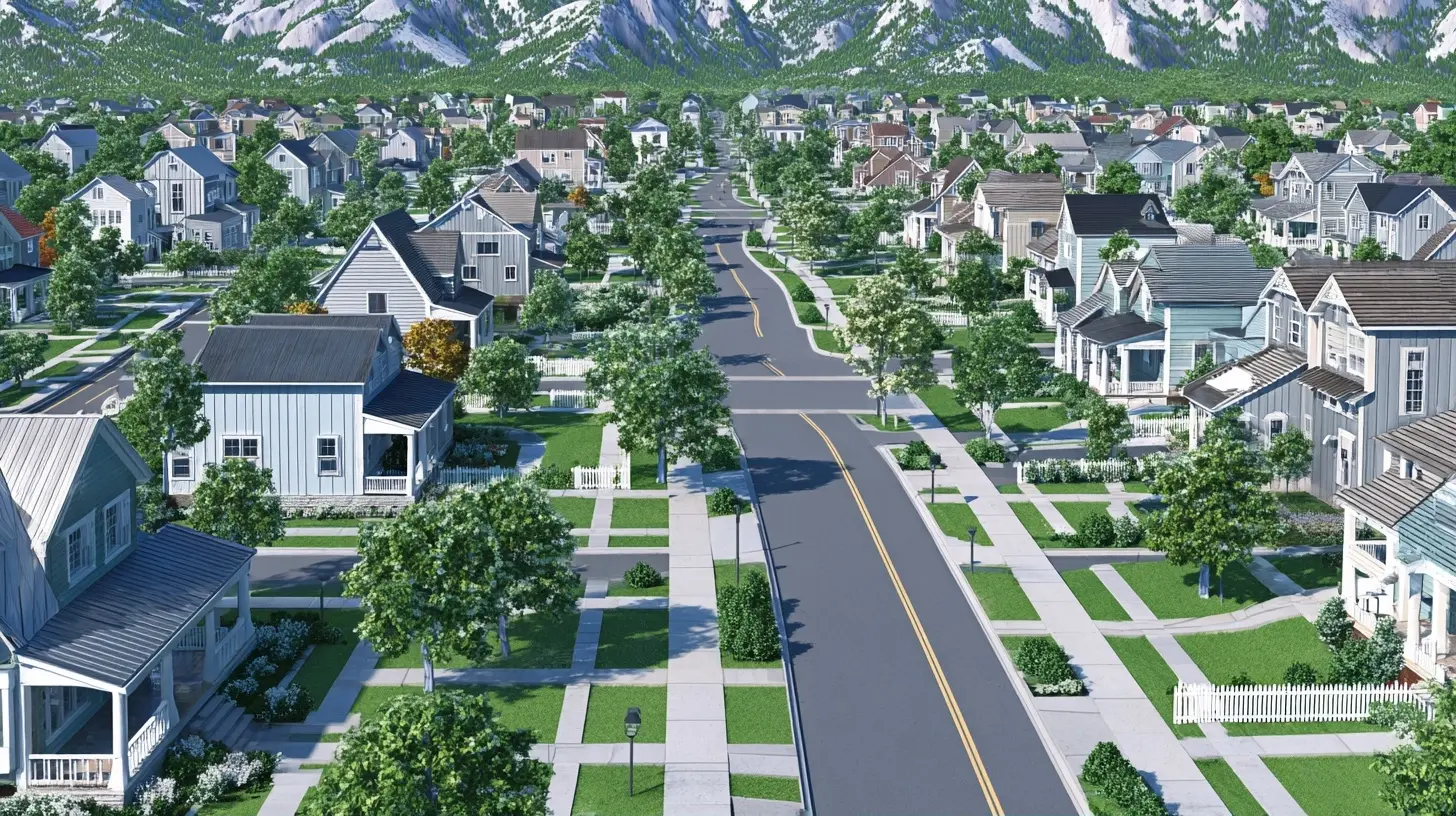
The Suburban Reboot: Not Your Parents' Subdivision
The classic American suburb, with its cul-de-sacs, large lawns, and strict separation of uses, is facing an identity crisis. The demand for that specific product is shrinking, not because people dislike space, but because the lifestyle it supports is increasingly inefficient and lonely. The post-2027 suburb is not a retreat from urbanity. It is a renegotiation of it.The Rise of the 15-Minute Suburb
The most significant change is the retrofitting of suburban fabric to support local living. The original suburbs were designed for the car and the nuclear family, with a single trip to the grocery store and a single trip to the office. Now, households are smaller, older, and more diverse. Two-income families have no time for a 20-minute drive to buy milk. Retirees do not want to drive at night. Young adults, priced out of cities, want walkability without the rent.The solution is the 15-minute suburb, where daily needs, groceries, healthcare, parks, coffee, and light retail, are within a 15-minute walk or bike ride from most homes. This is not a utopian planning concept. It is a market response to demographic reality. Developers are converting dead strip malls into mixed-use town centers. Municipalities are legalizing accessory dwelling units (ADUs) in backyards to increase density without changing the character of neighborhoods. Old office parks, half-empty since the remote work surge, are being rezoned for residential and light commercial use.
The key trade-off here is between privacy and convenience. A traditional suburban lot offers privacy, but it isolates you from services. A 15-minute suburb offers convenience but requires accepting a higher density of neighbors and less private outdoor space. The successful suburban communities of the late 2020s will be those that offer a gradient of housing types, from single-family homes on small lots to townhouses and garden apartments, all within a walkable network. The failure mode is the "fake walkable" development, where paths lead to a retention pond and a fence, and the "town center" is a parking lot with a Starbucks.
The Second Home as a Primary Residence
A quieter but powerful trend is the conversion of vacation homes into primary residences. For those with location-flexible jobs, the second home in a resort area or a scenic rural town is no longer a weekend escape. It is becoming the main base. This is driven by the recognition that a home's value is not just financial, but experiential. If you can work from anywhere, why not work from a lake house in the Adirondacks or a mountain town in Colorado?This has a destabilizing effect on those local communities. It drives up prices for long-term residents, creates a seasonal economy that is not sustainable year-round, and strains local infrastructure. The post-2027 reality is that many "suburban" migrants are not moving to the next town over. They are moving to the next state, often to places with lower taxes, better climate, or more recreational access. This is not a uniform trend, but a selective one, favoring states with pro-business policies, good broadband, and natural amenities.
The practical advice for anyone considering this move is to rent for a year before buying. The fantasy of living in a ski town is often shattered by the reality of winter maintenance, limited healthcare, and the absence of cultural diversity. The people who thrive in this model are those who are genuinely self-sufficient, do not need a large social network, and have the financial buffer to handle a lower resale market if they need to move back.
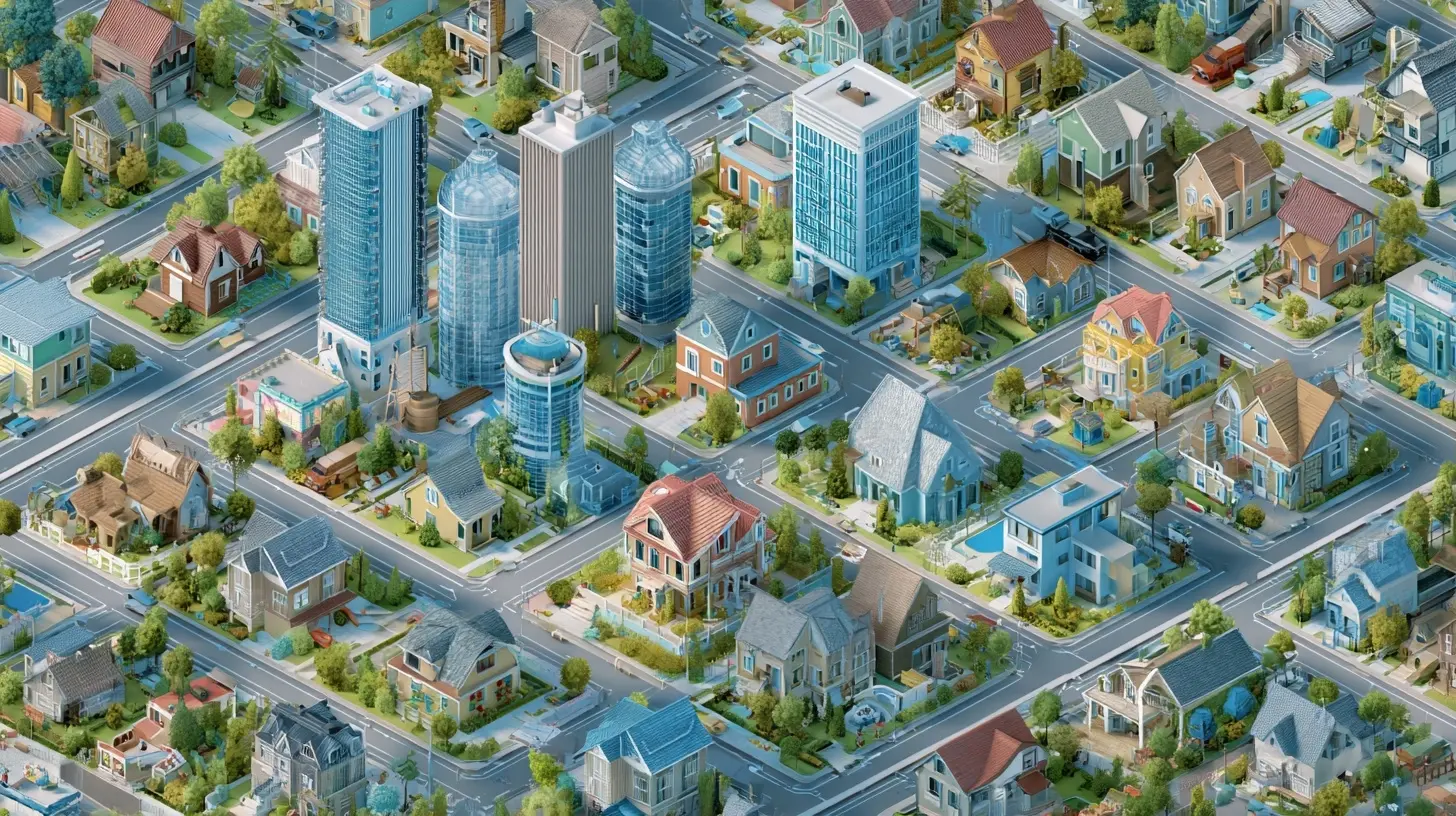
The Urban Core: A Tale of Two Cities
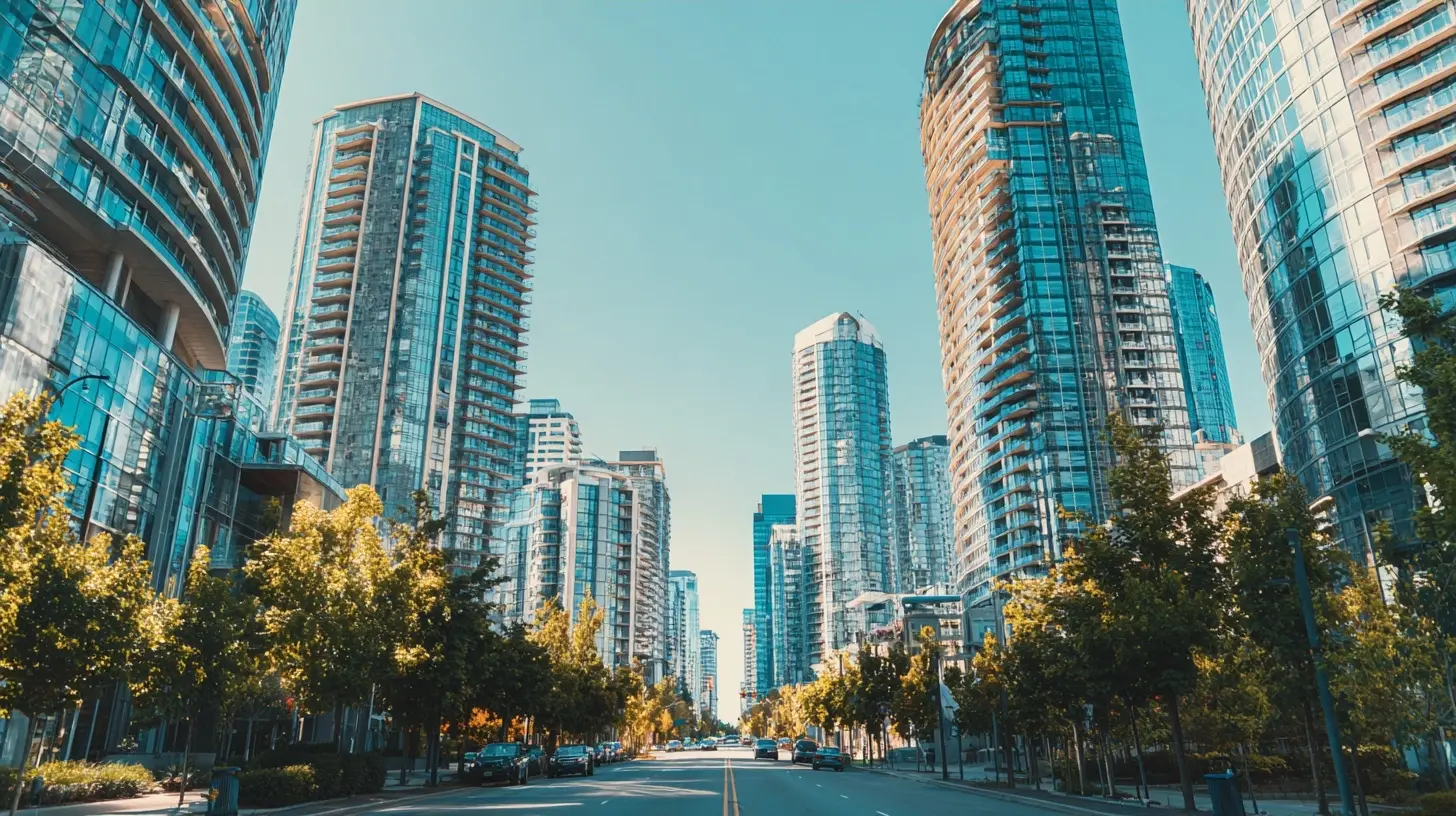
The urban core is not dying, but it is bifurcating into two distinct markets: the "superstar" cities and the "secondary" cities. The superstar cities, New York, London, San Francisco, are not going anywhere. They remain the headquarters of finance, tech, media, and law. They offer a density of opportunity and networking that cannot be replicated remotely. However, they are becoming more exclusive and more specialized.The Luxury and the Service Economy
In these superstar cities, the post-2027 dynamic is a stark contrast between high-income professionals and the service workers who support them. The professional class is returning to the office, not for the work, but for the collaboration and the career acceleration. They are paying premium prices for small apartments near the office, accepting less space for more convenience. The service workers, baristas, nurses, teachers, restaurant staff, are being pushed further and further out. The urban core is becoming a playground for the wealthy, with a commuter underclass that travels hours each day to serve them.This is not a sustainable model. Cities are beginning to recognize that a vibrant urban core requires a diverse population. The policy response is a push for "middle housing," missing middle housing like duplexes, triplexes, and small apartment buildings, to be legalized in formerly single-family zones. The fight over zoning is the defining political battle of the late 2020s in urban America. The pro-density side argues that only by allowing more housing can we lower costs and retain essential workers. The anti-density side argues that neighborhoods are being destroyed by developers and that the character of the city is being lost.
The truth is that both sides are right. Uncontrolled development can destroy the social fabric of a neighborhood. But a city that prices out its teachers and nurses is a city that will eventually fail. The best practice is not to build luxury towers exclusively, but to mandate a mix of unit sizes and affordability levels in new developments. The worst practice is to do nothing, which guarantees that the problem worsens.
The Secondary City Opportunity
The more interesting story is in secondary cities, places like Pittsburgh, Cleveland, Baltimore, and even smaller metros like Knoxville or Boise. These cities offer many of the cultural and professional benefits of the superstar cities, but at a fraction of the cost. They are attracting the "remote refugees" who have kept their high salaries from coastal employers but moved to a lower-cost base.This is a massive opportunity for these cities, but it comes with a warning. The influx of high-income remote workers can trigger the same gentrification that plagued the superstar cities a decade earlier. The locals who have lived there for generations are suddenly priced out of their own neighborhoods. The key to success for these secondary cities is to manage growth proactively. This means investing in public transit, building housing for all income levels, and fostering a local economy that is not solely dependent on the whims of remote workers who could leave at any moment.
For the individual, the decision to move to a secondary city is a smart financial play, but it requires a social adjustment. The cultural scene is smaller, the restaurants are fewer, and the pace of life is slower. It is a trade-off between financial freedom and cultural abundance. The mistake is moving to a secondary city and expecting it to be a smaller version of New York. It is not. It is a different beast, and it requires a different mindset.
The Infrastructure and Climate Reckoning
The most overlooked factor in the suburban versus urban debate is the physical condition of the built environment. Post-2027, this will be impossible to ignore. The infrastructure that was built in the 1950s and 1960s, the highways, the water mains, the power grids, is reaching the end of its useful life. The cost of maintaining this sprawling network is immense, and it is a cost that is unevenly distributed.The Cost of Sprawl
Suburban development is notoriously expensive to maintain. The low density means that a single mile of road serves far fewer people than in a city. The water pipes are longer, the sewer lines are longer, and the power lines are longer. When these systems fail, the cost per household is much higher than in a dense urban area. Many suburban municipalities are facing a fiscal cliff. They do not have the tax base to replace their aging infrastructure, and they are faced with the choice of massive tax increases or catastrophic system failures.This is the hidden cost of the suburban dream. The initial purchase price of a suburban home is often lower than an urban one, but the long-term cost of maintaining the infrastructure that serves it is higher. This is not to say that all suburbs are doomed. It is to say that the older, inner-ring suburbs, which have existing infrastructure and a denser layout, are in a much better position than the far-flung exurbs. The exurbs, built on cheap land with cheap construction, are the most vulnerable.
Climate Migration and the "Safe" Suburb
Climate change is no longer a theoretical future risk. It is a present-day factor in home buying decisions. The post-2027 market will see a clear price differential between properties in climate-resilient areas and those in high-risk zones. Coastal properties in Florida and the Carolinas are already seeing insurance premiums skyrocket. Wildfire-prone areas in California and the Pacific Northwest are facing similar pressures.This is driving a new form of migration. People are not just moving for jobs or schools. They are moving for safety. The "climate haven" suburbs, located in the Upper Midwest, the Great Lakes region, and parts of the Northeast, are seeing an influx of buyers from the South and West. These areas offer a lower risk of hurricanes, wildfires, and extreme heat, but they come with their own risks, such as cold winters and the potential for lake-effect snow.
The practical advice is to look at the insurance market, not just the weather forecast. If insurers are pulling out of a region, that is a signal that the risk is too high. If you are buying in a climate-haven area, be prepared for the possibility of a population surge that will strain local resources. The best approach is to buy in a community that is actively planning for growth, not one that is hoping it will not come.
The New Economics of Homeownership
The decision to rent or buy has always been a financial one, but the post-2027 landscape has changed the calculus. The era of ultra-low interest rates is over. The era of double-digit annual home price appreciation is over, at least in most markets. The new reality is that housing is a place to live, not a get-rich-quick scheme.The Return of the Renter
For many, renting is becoming the more rational choice. The flexibility to move for a job, the lack of maintenance responsibility, and the ability to invest the down payment in a diversified portfolio are all arguments for renting. The stigma of renting is fading, particularly among younger generations who have seen their parents struggle with variable-rate mortgages and unexpected repair bills.The key is to calculate the "opportunity cost" of a down payment. If you put 100,000 dollars into a home, you are losing the potential returns on that money in the stock market. If the home appreciates at 3 percent per year and the stock market returns 7 percent, you are losing 4 percent per year in potential wealth. This is a simplified example, but it illustrates the point. Homeownership is not always the best financial move. It is often an emotional move, a desire for stability and control, and that is valid. But it should be recognized as such.
The Maintenance Trap
The biggest mistake new homeowners make is underestimating the cost of maintenance. A good rule of thumb is to budget 1 to 3 percent of the home's value per year for upkeep. A 400,000-dollar home will require 4,000 to 12,000 dollars per year in maintenance. This is not optional. A new roof, a new HVAC system, a failing water heater, these are not ifs, they are whens.In the post-2027 market, this is even more critical because many homes are older and have been deferred on maintenance. The pandemic-era renovation boom was often done poorly, with cheap materials and shoddy workmanship. A pre-purchase inspection is essential, but it is not enough. You should also get quotes from contractors for the major systems, roof, HVAC, electrical, plumbing, before you make an offer. This will give you a realistic picture of the true cost of the home.
The Design of the Future Home
The physical layout of the home is changing to accommodate new work and life patterns. The post-2027 home is not just a place to sleep. It is a place to work, to exercise, to educate, and to entertain.The Home Office is Non-Negotiable
The home office is no longer a luxury. It is a requirement. But it is not just a desk in the corner of the living room. A proper home office needs to be a separate room with a door, good lighting, and adequate soundproofing. It needs to be a place where you can close the door and be "at work." The mistake is trying to work from the kitchen table. It does not work. The psychological separation between work and home is essential for mental health and productivity.For those who work from home two or three days a week, the home office should be treated as a professional space. This means investing in a good chair, a good monitor, and a reliable internet connection. The cost of these items is trivial compared to the cost of the home itself, but they have an outsized impact on your quality of life.
The Flexible Space
The other major design trend is the flexible space. This is a room that can serve multiple purposes. It can be a guest bedroom, a home gym, a playroom for children, or a meditation space. The key is that it is not designed for a single, static use. This flexibility is what allows a home to adapt to the changing needs of a household over time.The best flexible spaces are those that are connected to the outdoors. A sliding glass door that opens onto a patio or a deck can make a small room feel much larger. The connection to nature is a powerful antidote to the stress of screen-based work. The post-2027 home is not about square footage. It is about the quality of the spaces and how they flow into one another.
Making the Decision: A Framework
So, how do you decide? The answer is not to look at the headlines or to follow the crowd. It is to look at your own life and your own priorities. There is no universally correct answer. There is only the correct answer for you.First, assess your work situation. Are you fully remote, hybrid, or fully in-person? This is the single biggest determinant of your options. If you are fully in-person, your choices are constrained by your commute. If you are hybrid, you have a wider radius. If you are fully remote, you can live almost anywhere.
Second, assess your family structure. Are you single, a couple, or a family with children? The needs of a family with school-age children are very different from those of a retired couple. The school district, the safety of the neighborhood, and the availability of extracurricular activities will be paramount for the former. The proximity to healthcare and the ease of maintenance will be paramount for the latter.
Third, assess your financial situation. This is not just about the purchase price. It is about the total cost of ownership, including taxes, insurance, maintenance, and utilities. It is also about your income stability. If you are in a volatile industry, a lower fixed cost, even if it means less space, might be the wiser choice.
Fourth, assess your psychological needs. Are you energized by the buzz of a city, or do you find it draining? Do you need a large yard for gardening, or is a balcony sufficient? Are you comfortable with the anonymity of an apartment building, or do you need to know your neighbors? These are not trivial questions. They are the questions that determine whether you will be happy in your home.
The future of suburban versus urban living is not a zero-sum game. It is a spectrum of choices, each with its own set of trade-offs. The people who will thrive are those who make a deliberate choice based on their own circumstances, not those who drift into a decision based on inertia or social pressure. The best home is not the one with the most amenities or the best location. It is the one that allows you to live the life you want to live.
all images in this post were generated using AI tools
Category:
Real Estate ForecastAuthor:

Mateo Hines
Discussion
rate this article
2 comments
Maribel Turner
This article offers an insightful perspective on the evolving dynamics between suburban and urban living. As preferences shift in response to societal changes, it will be fascinating to see how communities adapt to meet the needs of residents in the coming years.
October 10, 2026 at 3:29 AM
Josephine McCaw
Oh sure, let's all just pack our bags and decide if we want to live in a concrete jungle or a suburban paradise by 2027. I mean, who needs public transport and vibrant nightlife when you can have a lawn to mow and a neighbor who borrows sugar?
September 11, 2026 at 3:22 AM